
How Organic Soil Systems Actually Work
Organic soil is often discussed in simplified terms. Most conversations revolve around inputs, certifications, or labels — what can be applied, what is permitted, and what qualifies as organic.
What is discussed far less is how organic soil systems actually function.
This gap between perception and reality explains why organic outcomes vary so widely across regions, farms, and markets. When soil is reduced to products and compliance, expectations become misaligned, and results often disappoint. Understanding organic soil requires moving beyond inputs and labels, and toward systems, time, and management.
Soil Is Not a Surface — It Is a System
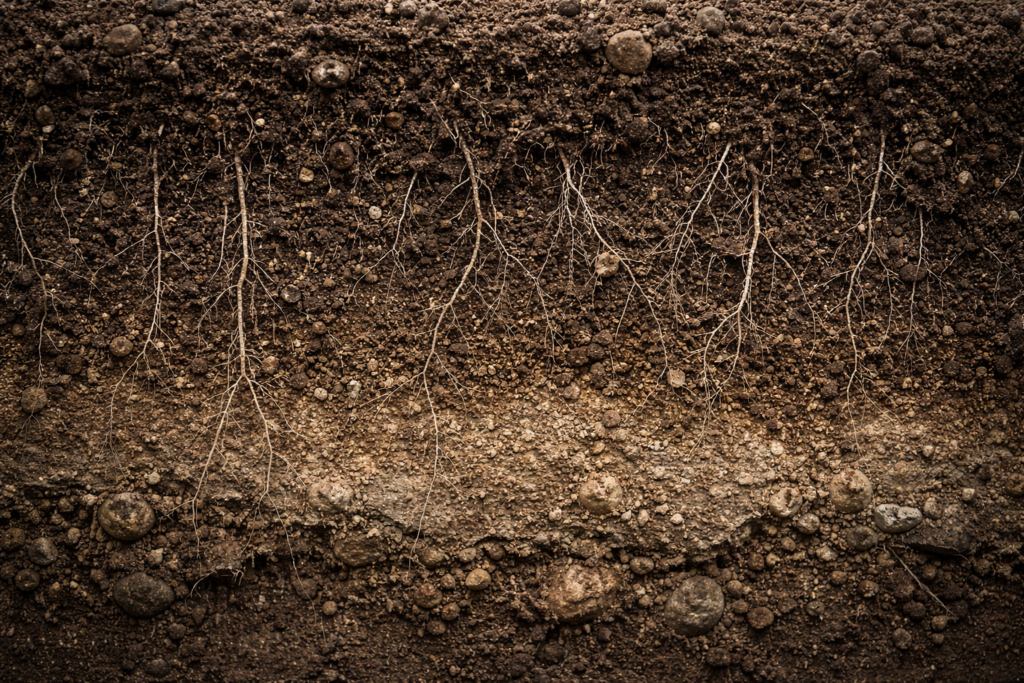
Soil is not an inert surface that simply anchors plants. It is a living, dynamic system shaped by continuous interaction between physical, biological, and chemical components.
At its core, soil systems operate through three interconnected layers:
- Physical structure — texture, aggregation, porosity, compaction, and water movement
- Biological life — bacteria, fungi, protozoa, insects, roots, and their interactions
- Chemical balance — nutrient availability, pH, mineral interactions, and exchange capacity
These layers do not function independently. Changes in soil structure affect oxygen and water availability, which directly influence microbial activity. Biological processes drive nutrient cycling, which alters chemical availability. Chemical imbalances, in turn, influence root growth and microbial populations.
Healthy organic soil emerges from the balance between these layers over time. It cannot be purchased, applied, or corrected through a single intervention.
The Role of Organic Inputs — and Their Limits
Organic inputs play an important role in supporting soil systems, but their role is frequently misunderstood.
Compost, vermicompost, bio-fertilisers, and microbial formulations can improve organic matter levels, stimulate biological activity, and enhance nutrient availability. Used appropriately, they help reinforce existing soil processes.
However, inputs are often expected to compensate for deeper structural or management weaknesses, such as:
- Poor soil structure or compaction
- Low baseline organic matter
- Irregular crop rotations
- Inconsistent field management
When inputs are treated as solutions rather than tools, over-application becomes common. This can lead to biological imbalance, reduced system resilience, and growing dependency on external inputs. In such cases, inputs may temporarily mask underlying problems without resolving them.
Organic inputs support systems. They do not replace them.
Time, Consistency, and Management Matter More Than Products
One of the least acknowledged realities of organic soil systems is time.
Biological processes respond gradually. Soil structure develops slowly. Organic matter accumulates through repeated cycles of growth, decay, and integration. Meaningful improvements often take years, not seasons.
This time lag explains why many organic transitions struggle. Expectations are set according to short-term production cycles, while soil systems operate on longer biological timelines.
Equally important is consistency. Frequent changes in inputs, abrupt management shifts, or reactive decision-making destabilise soil biology. In contrast, steady and predictable practices — even when modest — allow systems to adapt, recover, and strengthen.
In organic systems, management decisions often influence outcomes more than product choice.
Why Labels and Certifications Don’t Guarantee Soil Health
Organic certifications play a critical role in defining standards, ensuring traceability, and protecting consumer trust. They establish frameworks for what practices and inputs are permitted within organic systems.
However, certifications are designed to measure compliance, not performance.
They do not directly assess:
- Biological resilience
- Structural stability
- Nutrient cycling efficiency
- Long-term system balance
As a result, certified organic systems can vary significantly in soil health. Conversely, some non-certified systems may demonstrate strong biological function and structural integrity.
This distinction is not a critique of certification. It is a reminder that labels describe rules, while soil health reflects outcomes.
Soil Health Shapes Outcomes Across the Value Chain
The effects of soil systems extend far beyond the field.
Healthy soil influences:
- Yield stability across seasons
- Nutrient density and physical crop quality
- Storage behaviour and shelf life
- Consistency during processing and distribution
Downstream actors — processors, traders, and buyers — often encounter symptoms such as inconsistent quality, variable supply, or shortened shelf life without visibility into their root causes. Many of those causes originate at the soil level, long before harvest decisions are made.
In this way, soil systems quietly shape market reliability and trade outcomes.
Understanding Before Expectation
Organic soil systems reward patience, observation, and disciplined management. They respond poorly to shortcuts and exaggerated expectations.
When soil is treated as a system rather than a surface — and supported rather than forced — outcomes become more predictable, resilient, and aligned across the value chain.
Understanding how organic soil actually works does not simplify decisions.
It makes them more honest.